

Hangzhou Banglin Bonding Technology Co., Ltd. was established in 2005 which is a national high-tech and specialized enterprise. Located in Hangzhou Future Science Industrial Park. Our company's self-invented and produced hot-melt adhesive products are widely used in various industries, including shoes and bags, automotive batteries, automotive interiors, food packaging, adhesive tapes, labels, tapes, medical supplies, household daily necessities, logistics and express delivery, etc.
Why Choose Us
High Quality
Our Hangzhou factory serves more than 3800 customers, covering 23 provinces and 343 cities. The products are exported to Southeast Asia, the Middle East, South America and other countires. We have a comprehensive management system for product research and development, quality control, safety production,employee service, and after-sales service .
Rich Experience
The company has successively introduced digital management software such as SAP workshop integration software MES, CRM, cloud barcode and Yida digital platform to assist the enterprise in building a strategic management system.
Professional Team
The company has established a technical team with professional application research and development capabilities. The R&D center covers an area of more than 500 square meters, importing the most advanced R&D testing instrument from the United States-- Rheometer. Meanwhile we also hire senior expertes with PhDs in the United States to provide coporate training and guidance.
Certificate
Our hot melt adhesive has successfully passed the ISO 9001 quality management system certification, which means that the production process and quality management have reached the internationally recognized high standards, and it is able to provide customers with stable and high-quality products. At the same time, it has also obtained the REACH and SGS certification. These certifications indicate that the chemical substances in the hot melt adhesive comply with the strict regulatory requirements of the European Union, effectively guaranteeing the health of users and environmental safety, and fully demonstrating our high emphasis on environmental protection and firm commitment to sustainable development.

Thernal Insulation Material Hot Melt Adhesive
Insulation hot melt adhesive is specifically designed to bond various types of insulation materials such as foam, fiberglass or reflective board to walls, ceilings or other surfaces.

Underfloor Heating Hot Melt Adhesive
Hot melt adhesives an excellent choice for securing components in underfloor heating systems, ensuring reliable performance, ease of installation, and long-term durability.

Heated Board Hot Melt Adhesive
Hot melt adhesives an excellent choice for securing components in underfloor heating systems, ensuring reliable performance, ease of installation, and long-term durability.
Heated Board Hot Melt Adhesive are ideal for situations where simplified processing, streamlined manufacturing, and end-product protection are required. Hot melt adhesive applications are incredibly diverse. The adhesive is used in manufacturing hygiene, furniture, and packaging products as well as for medical, electronic, and automotive applications.
Heated Board Hot Melt Adhesive are 100% solid adhesives that are heated to temperatures above their melting point and applied to at least one substrate in the molten state. These adhesives can be very rigid materials or soft "tacky" materials depending on the ingredients used which are in turn dictated by the end use of the adhesive.
Benefits of Heated Board Hot Melt Adhesive
Has strong adhesion
Heated Board Hot Melt Adhesivehave strong adhesion and can quickly bond various materials. Whether it's metal, plastic, wood, or paper, as long as Heated Board Hot Melt Adhesiveare applied, they can quickly bond together with high bonding strength and are not easy to peel off.
Water-resistant, oil-resistant, corrosion-resistant
Hot Water-resistant, oil-resistant, corrosion-resistantmelt adhesive particles also have characteristics such as water resistance, oil resistance, and corrosion resistance. It can maintain stable performance in various harsh environments, and is not easily affected by moisture or aging. Therefore, Heated Board Hot Melt Adhesivehave also been widely used in industrial production, automotive manufacturing, medical devices and other fields.

Environmentally friendly, non-toxic, harmless
Heated Board Hot Melt Adhesivealso have the advantages of being environmentally friendly, non-toxic, and harmless. It does not contain harmful substances and will not cause harm to human health and the environment. At the same time, the use of Heated Board Hot Melt Adhesiveis also very convenient. Just heat and melt them and apply them to the areas that need to be bonded to achieve a fast bonding effect.
Very practical
Heated Board Hot Melt Adhesiveare a very practical tool, and their various benefits make our lives more convenient and comfortable. Heated Board Hot Melt Adhesiveplay an important role in fields such as home decoration, handicrafts, packaging and sealing, industrial production, automotive manufacturing, medical equipment, etc.
Application of Heated Board Hot Melt Adhesive
Packaging
Hot melt adhesives find a natural home in the packaging industry, where they are used to bond various materials like cardboard, paper, and plastics. In the fast-paced packaging sector, efficiency is key, and hot melt adhesives excel in providing rapid bonding without compromising strength. Case in point is the food industry, where hot melt adhesives ensure that cartons remain securely sealed, preserving the integrity of the contents.
Automotive Assembly
Automotive manufacturing requires adhesive solutions that can withstand the rigours of diverse environments, from extreme temperatures to constant vibrations. Hot melt adhesives have proven extremely useful in automotive assembly, bonding components like interior panels, engine parts, and insulation. Furthermore, polyolefin hot melts are often used for insulation of wires and to coat automotive electronic components.
Textiles
In the textile industry, where fabrics of various compositions and thicknesses need to be bonded seamlessly, hot melt adhesives are a game-changer. From apparel to home furnishings, these adhesives are employed in processes like seam sealing, hemming, and bonding fabrics together, providing an alternative to stitching. Notably, hot melt adhesives are preferred for their ability to maintain flexibility and resilience in textile applications, ensuring that the bonded materials withstand the stresses of daily use. Copolyester, copolyamide, polyurethane, polyethylene and EVA hot melts are all commonly used in the textile sector.
Electronics
The world of electronics relies on precision bonding to ensure the longevity and functionality of components. Hot melt adhesives offer a wide range of solutions for electronic assembly, providing reliable and rapid bonding. From affixing delicate wiring onto a circuit board to sealing electronic devices against moisture, the versatility of hot melt adhesives in the electronics industry is evident. Their ability to bond dissimilar materials and enable structural stability make them an ideal choice for intricate electronic applications.
Bookbinding
In bookbinding, hot melt adhesives allow to securely bond pages without compromising the flexibility of the book spine. Perfect Binding, a fast and inexpensive form of binding mostly used for paperbacks, employs fast-drying hot melts to attach pages to the book spine without sewing. Another form of binding, known as PUR Binding, utilises polyurethane reactive hot melt adhesives, enhancing a book's strength and durability.
What is the Difference Between Heated Board Hot Melt Adhesive and Thermoset Adhesive?
Many people who do not know much about adhesives do not know the difference between thermoset adhesives and thermoplastic adhesives. There are essential differences between these two categories of adhesive products, and because of this difference, yes they are in There are great differences in the way and scope of application.
Heated Board Hot Melt Adhesive is a thermoplastic adhesive. We know that many adhesives need to be heated during the bonding process. For Heated Board Hot Melt Adhesive, heating is to melt it. Because the Heated Board Hot Melt Adhesive is in a solid state at room temperature, only by heating, the Heated Board Hot Melt Adhesive can be melted into a liquid state and bonded on the surface of the adherend.
Thermosetting adhesives also need to be heated during sizing, because under certain temperature conditions, the chemical substances in the thermosetting adhesive components will speed up the chemical reaction and rapidly change from a linear molecular structure to a network-like cross-linked structure. Because of the chemical reaction that occurs throughout the process, thermoset adhesives are often referred to as reactive adhesives.
Heated Board Heated Board Hot Melt Adhesive are heated and melted, while thermosetting adhesives are heated and cured. Whether it is Heated Board Hot Melt Adhesive or thermosetting adhesive, they have their advantages and disadvantages, and they have a very wide range of applications in their respective fields. Heated Board Heated Board Hot Melt Adhesive are more efficient, and because they are solid at room temperature, they are cleaner and more environmentally friendly.
Types of Heated Board Hot Melt Adhesive
EVA Hot Melt Glues – EVA stands for ethylene vinyl acetate. The most common hot melt adhesive used in packaging and paper converting processes. Extremely versatile with a range of temperature resistance. It sets quickly and is waterproof.
Polyethylene Hot Melt Glues – Low odor and provide excellent thermal stability. It also works well for case, carton, and tray sealing applications.
Polyurethane Hot Melt Glues (PUR) – Cools and forms a bond like a traditional hot melt but provides exceptional heat and cold resistance upon exposure to air moisture. Can't be re-melted.
Polyamide Hot Melt Glues – Heat resistant and provides a high-strength bond. It also offers excellent resistance to grease and oils. For use on difficult-to-bond materials.
APAO Hot Melt Glues – Stands for amorphous poly alpha olefins. Soft, tacky and flexible. Often used in product assembly applications.
Removable Low Tack to High Tack Glue – Commonly used on non-porous surfaces to create a removable bond without leaving a messy residue.
Pressure Sensitive Adhesives (PSA) – Also known as self-stick adhesive, it forms a bond when pressure is applied to bond the adhesive with the adherend. No solvent, water, or heat is needed to activate the adhesive.
Heated Board Hot Melt Adhesive Work
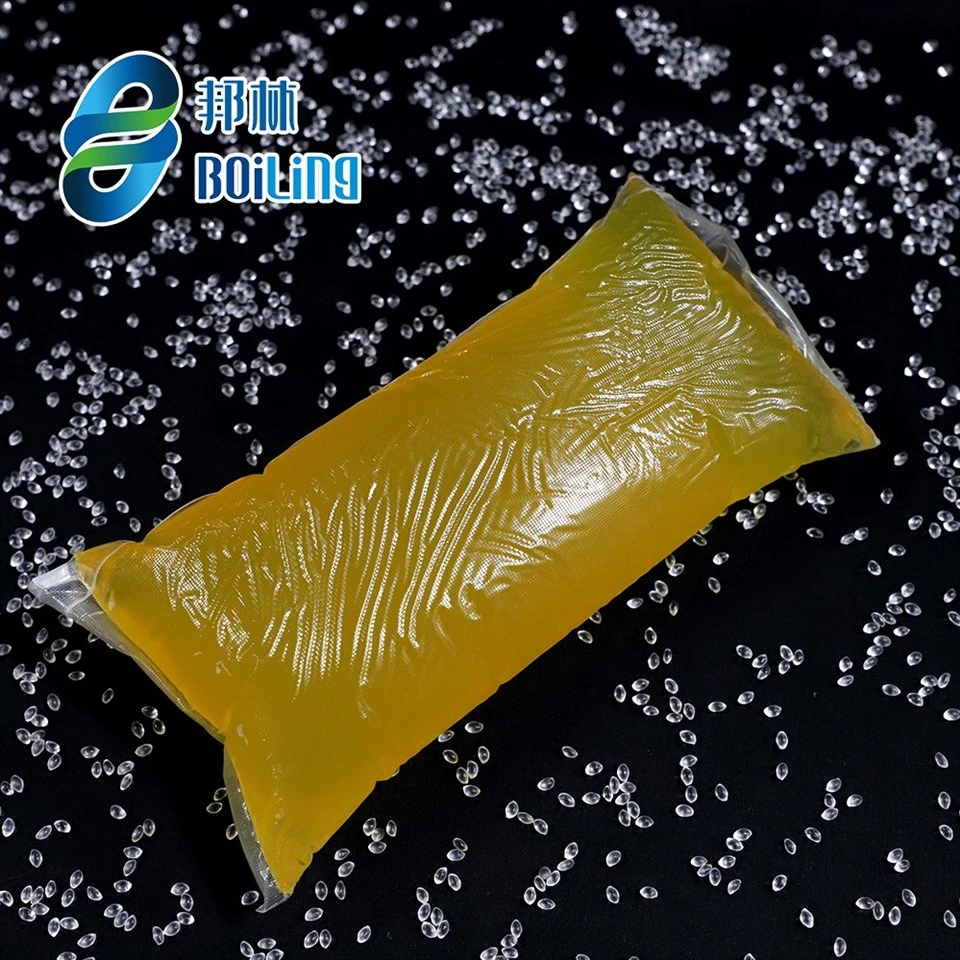
Understanding how Heated Board Hot Melt Adhesive work is essential for achieving optimal bonding results. Heated Board Hot Melt Adhesive are solid at room temperature and require heating to become molten. They are typically supplied in the form of solid sticks, pellets, or granules that are melted using a hot melt glue gun or a specialized hot melt adhesive system.
Once molten, the adhesive is applied to the surfaces that need to be bonded. As the adhesive cools, it solidifies and forms a strong bond between the two surfaces. The heat activates the adhesive, allowing it to penetrate the substrate and create a secure bond.
The unique properties of Heated Board Hot Melt Adhesive, such as their low viscosity when molten and high viscosity when solid, contribute to their excellent bonding capabilities. The low viscosity allows the adhesive to flow easily into the gaps and irregularities of the surfaces, ensuring maximum contact and adhesive coverage. As the adhesive solidifies, its high viscosity prevents it from flowing out of the bond line, providing a strong and durable bond.
Choosing the Right Hot Melt Adhesive for Your Project
Selecting the right hot melt adhesive is crucial for achieving optimal bonding results. There are several factors to consider when choosing a hot melt adhesive for your specific project.
First, consider the materials that need to be bonded. Different materials require different types of adhesives to achieve a strong and durable bond. For example, bonding plastics may require a different adhesive formulation than bonding wood or metal. Consult with adhesive manufacturers or suppliers to determine the most suitable adhesive for your specific materials.
Next, consider the required bond strength and flexibility. Some applications may require a flexible bond that can withstand movement or vibrations, while others may require a rigid bond for structural support. The adhesive formulation and its specific properties, such as tensile strength and elongation, play a crucial role in determining the bond's strength and flexibility.
Another important factor to consider is the application temperature. Some Heated Board Hot Melt Adhesive have a lower melting point, making them suitable for low-temperature applications, while others have a higher melting point for high-temperature applications. Ensure that the adhesive can withstand the operating conditions of your project to prevent bond failure.
Proper surface preparation is essential for achieving strong and durable bonds with Heated Board Hot Melt Adhesive. Before applying the adhesive, ensure that the surfaces are clean, dry, and free from any contaminants such as dust, grease, or oil. Any residues on the surfaces can hinder the adhesive's ability to bond effectively.
To clean the surfaces, use a mild detergent or solvent that is compatible with the materials being bonded. Gently scrub the surfaces with a clean cloth or brush to remove any dirt or debris. After cleaning, allow the surfaces to dry completely before applying the hot melt adhesive.
In addition to cleanliness, surface roughness can also enhance adhesive bonding. Roughening the surfaces using sandpaper or other abrasive materials can increase the adhesive's grip and improve bond strength. However, be cautious not to damage the materials or create excessive roughness that could compromise the overall integrity of the bond.

Hangzhou Banglin Bonding Technology Co., Ltd. was established in 2005 which is a national high-tech and specialized enterprise. Located in Hangzhou Future Science Industrial Park. Our company's self-invented and produced hot-melt adhesive products are widely used in various industries, including shoes and bags, automotive batteries, automotive interiors, food packaging, adhesive tapes, labels, tapes, medical supplies, household daily necessities, logistics and express delivery, etc.
Certificate

FAQ


