

Hey there! As a hot melt adhesive supplier, I often get asked about how hot melt adhesive actually works. So, I thought I'd break it down in a way that's easy to understand.
First off, let's talk about what hot melt adhesive is. It's a type of adhesive that's solid at room temperature. When you heat it up, it turns into a liquid that can be applied to surfaces. Once it cools down, it solidifies again and creates a strong bond.
The key to how hot melt adhesive works lies in its chemical composition. Most hot melt adhesives are made up of polymers, which are long chains of molecules. These polymers give the adhesive its strength and flexibility. There are also other additives in the mix, like tackifiers, which help the adhesive stick to surfaces, and waxes, which can control the melting point and viscosity of the adhesive.
When you heat up the hot melt adhesive, the polymers start to move around more freely. The heat breaks some of the weak bonds between the polymer chains, allowing them to flow like a liquid. This is when you can apply the adhesive to the surfaces you want to bond. You can use different methods to apply it, like a hot melt gun for small projects or industrial equipment for large - scale applications.
Once the adhesive is applied to the surfaces, it starts to cool down. As it cools, the polymer chains start to come back together and form new bonds. This process is called solidification. The tackifiers in the adhesive help it stick to the surfaces right away, while the polymers provide long - term strength.
Let's take a closer look at some of the factors that affect how well hot melt adhesive works.
Temperature
Temperature is crucial. If you heat the adhesive too much, the polymers can break down, and the adhesive might lose its bonding properties. On the other hand, if it's not heated enough, it won't turn into a liquid that can be easily applied. Each type of hot melt adhesive has an optimal temperature range for melting and application. For example, some adhesives might melt at around 120°C (248°F), while others could require a higher temperature of up to 180°C (356°F).

Surface Preparation
The surfaces you're bonding also matter a lot. They need to be clean and dry. If there's dirt, oil, or moisture on the surfaces, the adhesive won't be able to form a good bond. You might need to clean the surfaces with a solvent or sand them lightly to create a rough surface that the adhesive can grip onto.
Pressure
Applying pressure to the bonded surfaces while the adhesive is still hot can help improve the bond. Pressure helps the adhesive spread evenly and get into all the tiny crevices on the surfaces. This creates a stronger mechanical bond.
Now, let's talk about some of the different types of hot melt adhesives we offer.
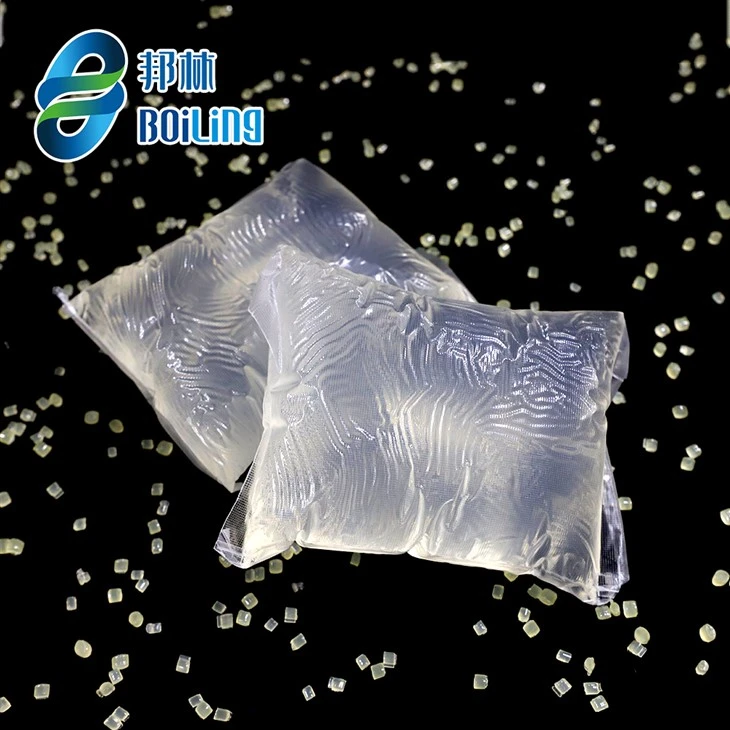
One popular type is the Solid Hot Melt Pressure Sensitive Glue. This type of adhesive is great because it's ready to stick as soon as it's applied. It doesn't need a long curing time like some other adhesives. It's often used in applications where you need a quick and strong bond, like in the packaging industry for sealing boxes.
Another type is the Spray Coating Hot Melt Pressure Sensitive Adhesive. This adhesive can be sprayed onto surfaces, which makes it ideal for covering large areas quickly. It's commonly used in the automotive and furniture industries for bonding fabrics and other materials.
So, why choose our hot melt adhesives? Well, we've been in the business for a long time, and we know what it takes to make a high - quality product. Our adhesives are made with the best materials, and we test them thoroughly to make sure they meet the highest standards. We also offer a wide range of products to suit different needs, whether you're a small - scale crafter or a large - scale manufacturer.
If you're interested in our hot melt adhesives, we'd love to hear from you. Whether you have questions about which product is right for your application or you're ready to place an order, don't hesitate to get in touch. We're here to help you find the perfect adhesive solution for your project.
References
- Harper, C. A. (2002). Handbook of Plastics, Elastomers, and Composites. McGraw - Hill.
- Skeist, I. (Ed.). (2017). Handbook of Adhesives. CRC Press.