

Hey there! If you're like me, who's knee - deep in the glue business, you've probably been asked a million times, "What's the difference between hot melt adhesive glue and other types of glue?" Well, today, I'm gonna break it down for you in plain English. As a hot melt adhesive glue supplier, I've seen firsthand how these glues stack up against the competition.
First off, let's talk about what hot melt adhesive glue actually is. It's a thermoplastic adhesive that's in solid form at room temperature. When you heat it up, usually to around 160 - 180 degrees Celsius, it turns into a liquid. Once it cools down again, it hardens, creating a strong bond. Sounds simple, right? But how does it compare to other types of glue, like epoxy, PVA (polyvinyl acetate), and super glue?
1. Epoxy Glue
Epoxy glue is well - known for its industrial - strength bonding. It typically comes in two parts: a resin and a hardener. When you mix them together, a chemical reaction takes place, and the mixture starts to harden. This reaction is called curing.

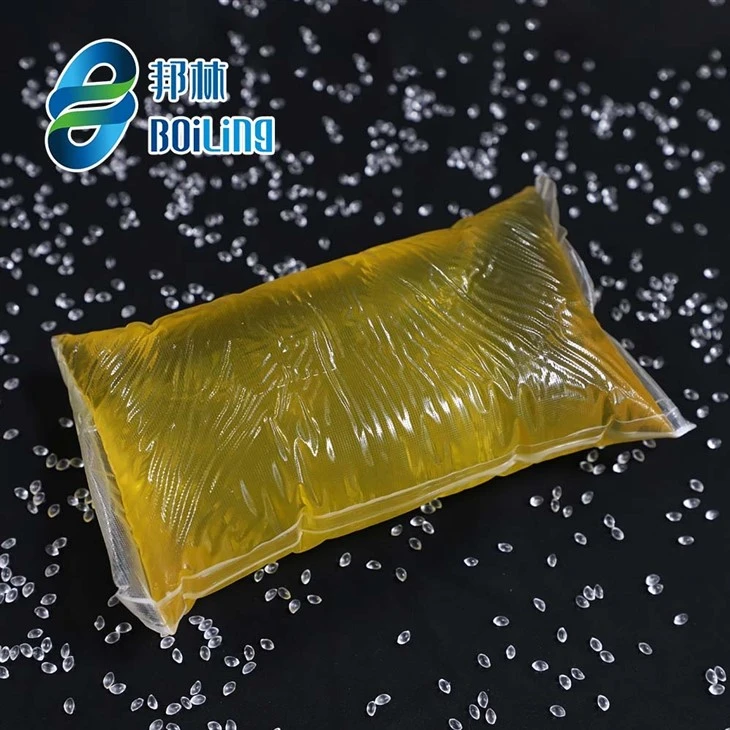
One of the big differences is the curing time. Epoxy can take anywhere from a few minutes to several hours to fully cure. In contrast, hot melt adhesive glue sets almost instantly as it cools. This makes hot melt glue a great choice for high - speed production lines where time is of the essence.
Another difference is the flexibility. Epoxy forms a very rigid bond. Once it's cured, it's not going to bend much. Hot melt adhesives, on the other hand, can be formulated to be flexible, which is useful in applications where the bonded materials need to move or bend, like in some packaging or automotive interiors.
2. PVA Glue
PVA glue, also known as white glue or school glue, is a water - based adhesive. It's commonly used in woodworking, paper crafts, and for kids' projects.
The first major distinction is the drying process. PVA glue dries by evaporation of the water content. This means it can take a while to dry, especially in high - humidity conditions. Hot melt glue doesn't rely on evaporation; it just needs to cool down, so it can be used in a wider range of environments.
In terms of strength, PVA is great for porous materials like wood and paper. But it might not be as strong as hot melt glue on non - porous surfaces. Hot melt adhesive can bond a variety of materials, including plastics, metals, and textiles, with good strength.
3. Super Glue
Super glue, or cyanoacrylate glue, is famous for its quick - bonding properties. It forms an almost instant bond when it comes into contact with moisture.
However, super glue is very brittle. Once it bonds, the joint can break easily under stress. Hot melt adhesive can be made to be much more durable and shock - resistant. Also, super glue has limited gap - filling ability. If there's a small gap between the materials you're trying to bond, hot melt glue can fill that gap and still create a strong bond.
Advantages of Hot Melt Adhesive Glue
As a hot melt adhesive glue supplier, I'm a bit biased, but there are some real benefits to using this type of glue.
Fast Setting
As I mentioned earlier, the fast - setting nature of hot melt glue is a game - changer. In industries where production speed is crucial, like packaging, labeling, and assembly lines, hot melt glue can keep things moving. You don't have to wait around for hours for the glue to dry or cure.
Versatility
Hot melt adhesives can be used to bond a wide range of materials. Whether you're working with PET Bottle Labeling Hot Melt for plastic bottles, Thermal Paper Hot Melt Pressure Sensitive Adhesive for thermal paper labels, or Barcode Label Transparent Hot Melt Glue for barcode labels, there's a hot melt adhesive solution for you.
No Solvents
Most hot melt adhesives are solvent - free. This means they're more environmentally friendly and safer to use. There are no harmful fumes or chemicals to worry about, which is a big plus in many workplaces.
Good Heat Resistance
Depending on the formulation, hot melt adhesives can have good heat resistance. This makes them suitable for applications where the bonded materials might be exposed to high temperatures, such as in automotive engines or electronic devices.
Disadvantages of Hot Melt Adhesive Glue
Of course, no glue is perfect. Here are some of the drawbacks of hot melt adhesive glue.
Temperature Sensitivity
Since hot melt glue works by melting and cooling, it's sensitive to temperature. If the environment is too cold, it might not melt properly, and if it's too hot, it could soften or lose its bond strength.
Limited Open Time
The open time is the time you have to position the materials after applying the glue. Hot melt glue has a relatively short open time because it sets quickly. This can be a challenge if you need more time to align or adjust the parts you're bonding.
If you're in the market for hot melt adhesive glue, or if you still have questions about how it compares to other types of glue, don't hesitate to reach out. We're here to work with you to find the perfect adhesive solution for your needs. Whether you're in a small - scale craft business or a large - scale manufacturing plant, we've got the knowledge and products to help you succeed. Start a conversation with us today and discover how hot melt adhesive glue can take your projects to the next level.
References
- "The Handbook of Adhesive Technology" by Skeist, I.
- "Adhesives: Science, Technology, and Applications" by Harper, C. A.