

As a supplier of Label Hot Melt Adhesive, I often encounter questions from customers about the melting point of our products. Understanding the melting point of label hot melt adhesive is crucial for various applications, as it directly impacts the performance and efficiency of the labeling process. In this blog post, I will delve into the concept of the melting point of label hot melt adhesive, factors influencing it, and its significance in different labeling scenarios.
What is the Melting Point of Label Hot Melt Adhesive?
The melting point of label hot melt adhesive refers to the temperature at which the adhesive transitions from a solid state to a liquid state. At this temperature, the adhesive becomes fluid enough to be applied to the label substrate and bond it to the target surface. The melting point is a critical property of hot melt adhesives, as it determines the temperature range at which the adhesive can be effectively processed and used.
Label hot melt adhesives typically have melting points ranging from approximately 80°C to 180°C (176°F to 356°F). The specific melting point of an adhesive depends on its formulation, which includes the types and proportions of polymers, resins, waxes, and other additives used. Different formulations are designed to meet the requirements of various labeling applications, such as paper labels, film labels, and RFID labels.
Factors Influencing the Melting Point
Several factors can influence the melting point of label hot melt adhesive:
Polymer Composition
The polymers used in the adhesive formulation play a significant role in determining the melting point. Different polymers have different melting temperatures, and the choice of polymers can be adjusted to achieve the desired melting point range. For example, adhesives based on ethylene-vinyl acetate (EVA) copolymers typically have melting points in the range of 80°C to 120°C (176°F to 248°F), while adhesives containing polyolefins may have higher melting points, ranging from 120°C to 180°C (248°F to 356°F).
Resin and Wax Content
Resins and waxes are commonly added to hot melt adhesives to modify their properties, including the melting point. Resins can increase the adhesive's tack and adhesion, while waxes can lower the viscosity and improve the flow properties. The type and amount of resin and wax used in the formulation can affect the melting point of the adhesive. For instance, adding a low-melting-point wax can reduce the overall melting point of the adhesive, making it easier to process at lower temperatures.
Additives
Other additives, such as antioxidants, stabilizers, and plasticizers, can also influence the melting point of label hot melt adhesive. Antioxidants and stabilizers help prevent the adhesive from degrading at high temperatures, while plasticizers can improve the flexibility and adhesion of the adhesive. The presence of these additives can affect the physical and chemical properties of the adhesive, including its melting point.
Significance of the Melting Point in Labeling Applications
The melting point of label hot melt adhesive is a critical factor in determining its suitability for different labeling applications. Here are some key considerations:
Processing Temperature
The melting point of the adhesive determines the temperature at which it needs to be heated for application. It is essential to choose an adhesive with a melting point that is compatible with the labeling equipment and the substrate material. If the melting point is too high, the adhesive may require excessive heating, which can damage the label or the substrate. On the other hand, if the melting point is too low, the adhesive may not provide sufficient adhesion or may flow uncontrollably during the labeling process.
Adhesion Performance
The melting point of the adhesive can also affect its adhesion performance. Adhesives with higher melting points generally have better heat resistance and can maintain their adhesion strength at elevated temperatures. This makes them suitable for applications where the labels are exposed to high temperatures, such as in automotive, electronics, and food packaging industries. Conversely, adhesives with lower melting points may be more suitable for applications where the labels need to be applied at lower temperatures or where flexibility is required.
Compatibility with Substrates
The melting point of the adhesive should be compatible with the substrate material to ensure proper adhesion. Different substrates have different heat resistance properties, and using an adhesive with a melting point that is too high can cause the substrate to warp, shrink, or melt. It is important to consider the substrate's melting point and heat sensitivity when selecting a label hot melt adhesive.
Types of Label Hot Melt Adhesives and Their Melting Points
There are several types of label hot melt adhesives available on the market, each with its own melting point range and performance characteristics. Here are some common types:
RFID Labeling Hot Melt Adhesive
RFID Labeling Hot Melt Adhesive is specifically designed for use in RFID labeling applications. These adhesives need to have a low melting point to ensure that they do not damage the RFID chips during the labeling process. The melting point of RFID labeling hot melt adhesives typically ranges from 80°C to 100°C (176°F to 212°F).
Hot Melt Adhesive Glue
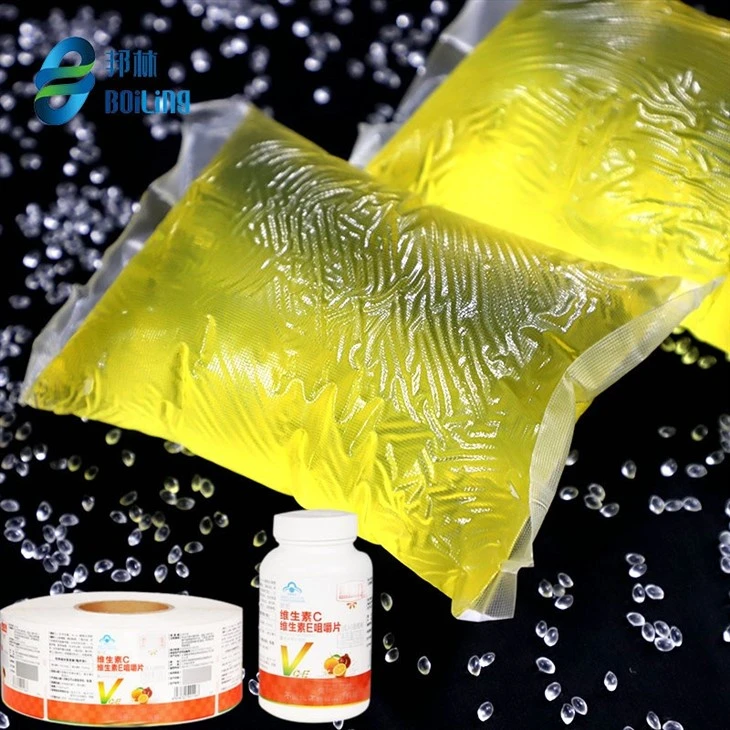
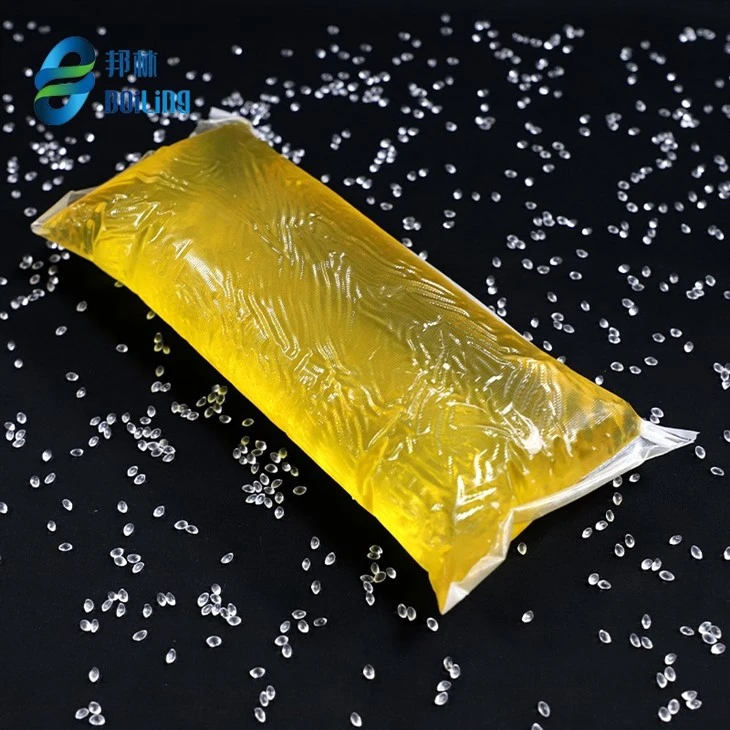
Hot Melt Adhesive Glue is a general-purpose adhesive used for a wide range of labeling applications. It can be formulated with different polymers and additives to achieve various melting points and adhesion properties. The melting point of hot melt adhesive glue can range from 80°C to 180°C (176°F to 356°F), depending on the specific formulation.
Hot Melt Adhesive For BOPP Film Label
Hot Melt Adhesive For BOPP Film Label is designed for use with BOPP (biaxially oriented polypropylene) film labels. These adhesives need to have good adhesion to BOPP film and a melting point that is compatible with the film's heat resistance. The melting point of hot melt adhesive for BOPP film labels typically ranges from 100°C to 140°C (212°F to 284°F).
Conclusion
The melting point of label hot melt adhesive is a crucial property that affects its processing, adhesion performance, and compatibility with different substrates. As a supplier of Label Hot Melt Adhesive, we offer a wide range of products with different melting points to meet the needs of various labeling applications. Whether you are looking for an adhesive for RFID labels, general-purpose labeling, or BOPP film labels, we can provide you with the right solution.
If you have any questions about the melting point of our label hot melt adhesives or need assistance in selecting the appropriate product for your application, please do not hesitate to contact us. Our team of experts is ready to help you find the best adhesive solution for your labeling needs.
References
- "Handbook of Pressure-Sensitive Adhesive Technology" by Donatas Satas
- "Adhesives Technology Handbook" by E. M. Petrie