

In the dynamic world of label manufacturing, the tear strength of label hot melt adhesive stands as a critical factor that significantly influences the performance and durability of labels. As a leading supplier of Label Hot Melt Adhesive, we understand the importance of this characteristic and its implications for various applications. In this blog post, we will delve deep into the concept of tear strength, its significance, and how it relates to our high - quality label hot melt adhesives.
Understanding Tear Strength
Tear strength refers to the ability of an adhesive to resist tearing when subjected to a force that attempts to separate it from the substrate or when the adhesive itself is being pulled apart. In the context of label hot melt adhesives, tear strength is crucial because labels are often exposed to a variety of mechanical stresses during their lifecycle. For example, when a label is peeled off a product, there is a pulling force acting on the adhesive. If the tear strength is too low, the adhesive may tear, leaving behind residue on the substrate or causing the label to fail prematurely.
Tear strength is measured in units of force per unit width, typically in Newtons per millimeter (N/mm). This measurement helps manufacturers and end - users to quantify the adhesive's ability to withstand tearing forces. A higher tear strength value indicates that the adhesive can better resist tearing, providing a more reliable bond between the label and the substrate.
Factors Affecting Tear Strength
Several factors can influence the tear strength of label hot melt adhesives. One of the primary factors is the chemical composition of the adhesive. Different polymers and additives used in the formulation of the adhesive can have a significant impact on its tear - resistant properties. For instance, adhesives based on certain types of elastomers tend to have higher tear strength compared to those based on more rigid polymers. Elastomers can stretch and deform under stress, absorbing the energy of the tearing force and preventing the adhesive from tearing.
The molecular weight of the polymers in the adhesive also plays a role. Higher molecular weight polymers generally result in adhesives with better tear strength. This is because the long - chain molecules can entangle with each other more effectively, creating a stronger network that resists tearing.
The application temperature is another important factor. When the adhesive is applied at the optimal temperature, it can flow and wet the substrate properly, forming a strong bond. If the application temperature is too low, the adhesive may not spread evenly, resulting in a weaker bond with lower tear strength. On the other hand, if the temperature is too high, the adhesive may degrade, also reducing its tear - resistant properties.
The surface characteristics of the substrate also affect tear strength. A smooth and clean substrate allows the adhesive to form a better bond, enhancing the tear strength. Rough or contaminated surfaces can prevent the adhesive from wetting the substrate effectively, leading to a weaker bond and lower tear strength.
Importance of Tear Strength in Different Label Applications
- Product Labels: In the consumer goods industry, product labels need to stay intact throughout the product's shelf life and during use. High tear strength ensures that the label remains firmly attached to the product, even when it is handled, transported, or exposed to environmental factors. For example, labels on food products, cosmetics, and electronics need to be able to withstand the normal wear and tear associated with their use. Our label hot melt adhesives with excellent tear strength provide a reliable solution for these applications, ensuring that the product information remains visible and the label does not peel off or tear.
- Shipping Labels: Shipping labels are exposed to harsh conditions during transit, including rough handling, vibrations, and temperature variations. A label with high tear strength can resist the forces exerted during shipping, ensuring that the label stays on the package and the shipping information remains legible. This is crucial for the efficient delivery of goods, as incorrect or missing labels can lead to delays and misrouting. Our adhesives are designed to meet the demanding requirements of shipping labels, providing a strong and durable bond that can withstand the rigors of the shipping process.
- Reflective Labels: Reflective labels are commonly used in safety applications, such as traffic signs and high - visibility clothing. These labels need to maintain their reflectivity and adhesion over time. Tear strength is important because it ensures that the reflective layer remains attached to the label substrate, even when the label is bent or stretched. Our reflective labels hot melt adhesive offers high tear strength, ensuring the long - term performance of reflective labels in various safety applications.
Our Label Hot Melt Adhesives and Tear Strength
As a supplier of Label Hot Melt Adhesive, we take pride in offering adhesives with excellent tear strength. Our R & D team has spent years researching and developing formulations that optimize the tear - resistant properties of our adhesives. We use high - quality polymers and additives to ensure that our adhesives have the right balance of flexibility and strength.
Our PSA Hot Melt Adhesive For Easy - Peel And Removable Labels is designed for applications where easy removal is required, while still maintaining sufficient tear strength. This adhesive can be peeled off cleanly without leaving residue, and at the same time, it can withstand normal handling and environmental stresses without tearing.
For applications involving plastic substrates, our Hot Glue For Plastic offers outstanding tear strength. Plastic surfaces can be challenging to bond to, but our adhesive is formulated to wet and adhere well to plastic, providing a strong and tear - resistant bond.
Testing and Quality Control
To ensure the tear strength of our label hot melt adhesives meets the highest standards, we have a rigorous testing and quality control process in place. We use state - of - the - art testing equipment to measure the tear strength of our adhesives under various conditions. Our testing includes both laboratory - based tests, where we simulate different application scenarios, and real - world field tests, where we evaluate the performance of the adhesives in actual label applications.
We also conduct regular quality audits to ensure that our manufacturing processes are consistent and that the tear strength of our adhesives remains within the specified range. This commitment to quality allows us to provide our customers with adhesives that they can rely on for their label applications.
Conclusion
The tear strength of label hot melt adhesive is a crucial property that determines the performance and durability of labels. As a leading supplier of Label Hot Melt Adhesive, we understand the importance of tear strength and have developed adhesives that offer excellent tear - resistant properties. Our adhesives are suitable for a wide range of label applications, from consumer product labels to shipping and reflective labels.
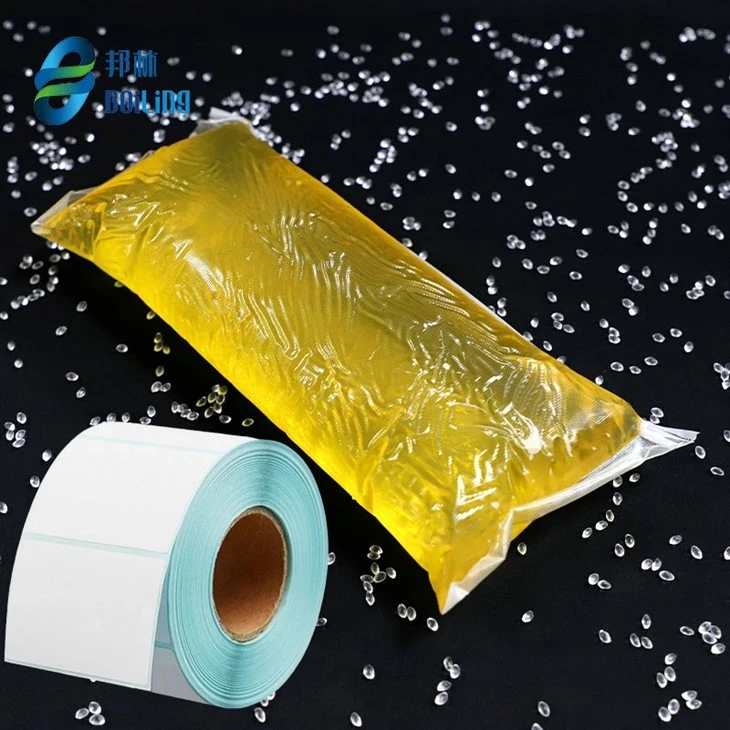

If you are in the market for high - quality label hot melt adhesives with excellent tear strength, we invite you to contact us for a consultation. Our team of experts can help you select the right adhesive for your specific application and provide you with all the technical support you need. Let us work together to ensure the success of your label projects.
References
- "Handbook of Pressure - Sensitive Adhesive Technology" by Donatas Satas
- "Adhesion Science and Engineering: Surfaces, Chemistry, and Applications" edited by K. L. Mittal